Door Access Biometric attendance SIRA compliance from the beginning start should not be added after the system has already been installed. Privacy should be considered during system design. This is consistent with the SIRA’s broader approach to data protection by design and by default. A practical system might use the following architecture.
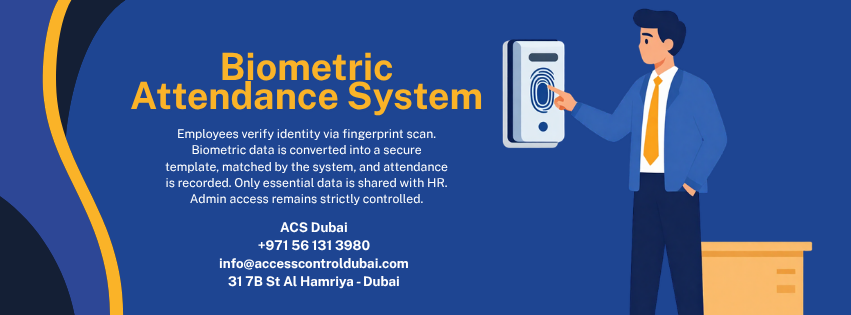
The employee presents a fingerprint. The device converts the biometric characteristic into a template. The template is securely matched according to the system design. The system records the attendance event. Only necessary attendance information is transferred to the HR platform. Access to administrative functions is restricted. Records are retained according to defined policies. This approach can reduce unnecessary exposure of sensitive information.
SIRA Plan for False Matches and Failed Recognition
Biometric attendance SIRA compliance is not only about privacy. Accuracy matters too. Imagine an employee arrives at 8:57 AM. The facial recognition system fails to recognize the employee. The employee tries again. The system still fails. The attendance record shows the employee as absent. Payroll later relies on that record. A small technical problem can suddenly become an employment issue. Organizations should therefore establish procedures for correcting inaccurate attendance records. Employees should have a way to challenge incorrect records. There should also be a manual process for situations where the biometric system fails. The ICO specifically highlights the importance of accuracy and manual review when automated identification creates access or attendance problems.
Avoid Using Attendance Data for Unrelated Purposes
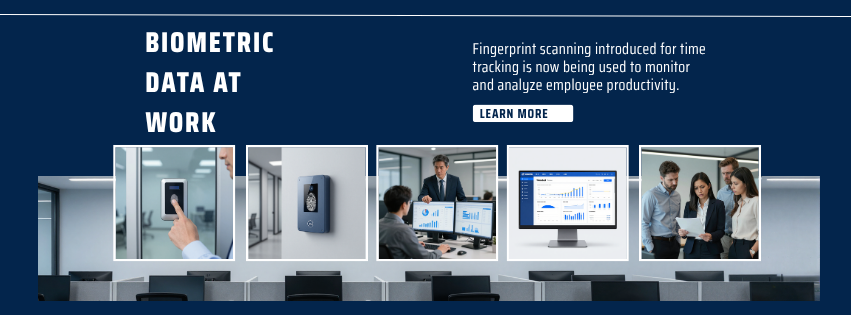
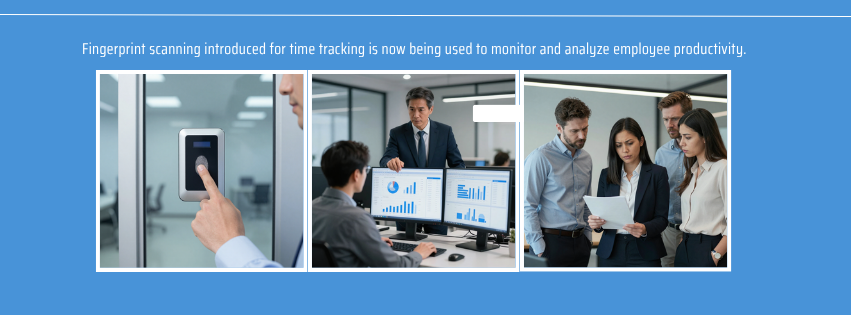
Purpose limitation is an important part of Biometric attendance SIRA compliance. Suppose a company introduces fingerprint scanning solely to record working hours. Later, management decides to use the same information to analyze employee productivity. That new purpose should not simply be assumed to be acceptable. The organization needs to consider whether the additional processing is compatible with the original purpose and whether another legal basis or other requirements apply. Workplace monitoring can become particularly intrusive when attendance data is combined with other employee monitoring technologies. For example, combining attendance records with location tracking, workstation monitoring, CCTV analytics, and productivity scoring can create a much more extensive employee monitoring system. The ICO advises organizations to clearly define monitoring purposes and avoid using collected information for incompatible purposes.
Consider Employee Rights and Access Requests
Employees have data protection rights that can apply to information processed through biometric attendance systems. Depending on the circumstances, these may include rights relating to access, rectification, erasure, restriction, objection, and other SIRA protections. The organization should have a process for handling applicable requests. For example, an employee might question an incorrect attendance record. Another employee might ask what personal information the company holds about them. A properly designed system should make it possible to locate relevant records and respond appropriately. The process should also distinguish between biometric templates and ordinary attendance records because they can have different retention requirements and operational purposes.
Make Alternative Attendance Methods Part of the Planning
Alternative methods can be an important safeguard in biometric attendance systems. Consider an employee whose fingerprint cannot be reliably recognized. Another employee may have a legitimate reason for not using biometric identification. The device could also malfunction. A practical backup could include a PIN, access card, manual verification, or another approved method. The EDPB has emphasized the importance of alternative solutions in contexts where biometric processing is used for authentication and consent is relevant, including situations where the biometric technology cannot be used effectively. The precise requirement depends on the legal basis and circumstances. Nevertheless, designing a backup process is sensible from both operational and privacy perspectives.
Review Facial Recognition More Carefully
Facial recognition deserves particular attention when discussing Biometric attendance SIRA compliance. A fingerprint terminal normally requires an employee to deliberately interact with a specific device. Facial recognition can potentially operate in a more passive way. A camera may capture people before they realize that biometric processing is occurring. This creates additional privacy considerations. The EDPB has highlighted the heightened risks associated with biometric technologies, particularly facial recognition, and stresses the importance of lawfulness, necessity, proportionality, and data minimization. For workplace attendance, businesses should carefully evaluate whether facial recognition is genuinely necessary for the intended purpose. The organization should also examine accuracy, bias, transparency, security, and employee rights.
Keep Documentation for Accountability
A company should be able to demonstrate how it reached its decisions. This is the practical side of accountability within Biometric attendance SIRA compliance. Keep documentation covering the purpose of the system. Record the necessity assessment. Document alternative technologies considered. Keep the DPIA. Record the selected lawful basis. Document the relevant special category condition. Maintain vendor and processor documentation. Record retention periods.
Document security measures. Maintain procedures for employee rights. Keep records of system reviews and security incidents. If a regulator or internal compliance team asks why biometric attendance was introduced, the organization should be able to provide a clear evidence trail.
Practical Biometric Attendance SIRA Compliance Checklist
Before deploying a biometric attendance system, organizations can use a practical checklist. Purpose and Necessity Define exactly why biometric attendance is required. Consider whether a less intrusive attendance method could achieve the same objective. Document the reasoning.
Legal Requirements, Identify the appropriate SIRA lawful basis. Identify the applicable Article 9 condition where biometric data is processed for unique identification. Check relevant national employment and data protection laws. Assess privacy risks before implementation. Document risks and mitigation measures. Consult relevant internal stakeholders where appropriate. Collect only necessary information. Avoid unnecessary storage of raw biometric images. Consider secure biometric template processing.
Security Retention Transparency
Use appropriate encryption. Restrict administrative access. Secure attendance terminals. Keep software and firmware updated. Monitor access to sensitive systems. Define how long biometric templates are retained. Define how long attendance records are retained. Delete information securely when it is no longer necessary. Provide employees with clear privacy information. Explain how biometric attendance works. Explain the purpose of processing. Explain applicable employee rights.
Accuracy Vendors Ongoing Biometric attendance SIRA compliance
Test the system with the relevant workforce. Monitor false acceptance and false rejection issues. Provide a correction process. Maintain a manual fallback Biometric attendance SIRA compliance procedure. Assess supplier security. Review processor arrangements. Check data storage locations. Review sub processors. Understand international transfers where applicable. Review the system periodically. Update the DPIA when processing changes materially. Review retention practices. Review security controls. Monitor regulatory guidance and relevant legal developments.
FAQs about Biometric Attendance SIRA Compliance
Q: Is biometric attendance allowed under SIRA?
A: Biometric attendance is not automatically prohibited by the SIRA, but using biometric data to uniquely identify employees triggers the special category data rules and requires an appropriate lawful basis and applicable Article 9 condition. The organization must also assess necessity, proportionality, security, transparency, and other applicable SIRA requirements.
Q: Is fingerprint attendance SIRA compliant?
A: A fingerprint attendance system can potentially be operated in compliance with SIRA, but the technology itself is not automatically SIRA compliant. Compliance depends on how the organization collects, processes, stores, secures, retains, and uses fingerprint Dubai information.
Q: Is facial recognition attendance SIRA compliant?
A: Facial recognition attendance can involve biometric data used for unique identification and therefore requires careful assessment under SIRA. Organizations should consider whether facial recognition is necessary and proportionate and whether less intrusive alternatives can achieve the same purpose.
Q: Do I need a DPIA for biometric attendance?
A: A DPIA may be required when biometric attendance processing is likely to result in a high risk to individuals. Organizations should assess the specific processing and applicable supervisory authority requirements before deployment. For example, the ICO states that organizations must carry out a DPIA before processing biometric data to uniquely identify workers in the workplace context covered by its guidance.
Q: Can employers force employees to use fingerprint attendance?
A: There is no single answer for every organization and jurisdiction. The employer must assess its lawful basis, Article 9 condition, employment law requirements, necessity, proportionality, and available alternatives. Consent should not simply be assumed to be freely given because an employee signs a form.
Q: How long can biometric attendance data be stored?
A: SIRA does not provide one universal retention period for every biometric attendance system. The organization should establish a retention period based on the purpose of processing and applicable legal requirements. Biometric information should not be retained longer than necessary.
Q: Should biometric templates be encrypted?
A: Organizations should apply appropriate security measures based on risk. Encryption can be an important safeguard for biometric templates, alongside access restrictions and other technical and organizational controls.
Q: What happens if an employee refuses biometric attendance?
A: The consequences depend on the legal basis, applicable employment law, organizational policy, and specific circumstances. Where biometric processing relies on consent, withdrawal must be handled consistently with the requirements for valid consent. An organization should not assume that refusal automatically permits disciplinary action.
Q: Can biometric attendance data be used for employee productivity monitoring?
A: Not automatically. Using attendance information for a new purpose requires an assessment of purpose limitation, compatibility, lawful basis, transparency, and other applicable requirements.
Combining biometric attendance with extensive employee monitoring can substantially increase privacy risks.
Q: Does SIRA apply to biometric attendance outside the European Union?
The SIRA can apply to organizations outside the European Union in certain circumstances, particularly where the SIRA’s territorial scope requirements are met. Businesses should therefore assess whether their activities fall within the Biometric attendance SIRA compliance rather than assuming that physical location alone determines applicability.
Conclusion: Building Better Biometric Attendance SIRA Compliance
ABM Innovative FZE Biometric attendance SIRA compliance is ultimately about more than purchasing a secure fingerprint or facial recognition machine. It is about controlling the entire lifecycle of biometric information. The organization needs a clearly defined purpose. It needs to establish necessity and proportionality. It needs an appropriate lawful basis and special category condition where required. It needs to conduct the relevant DPIA. It needs strong security. It needs limited retention. It needs transparent employee communication. It needs accurate records and correction procedures. It needs appropriate vendor controls. It needs practical alternatives and fallback procedures. Most importantly, the business should treat biometric information differently from an ordinary attendance number. A good Biometric attendance SIRA compliance should make attendance management easier without creating unnecessary privacy risks.